
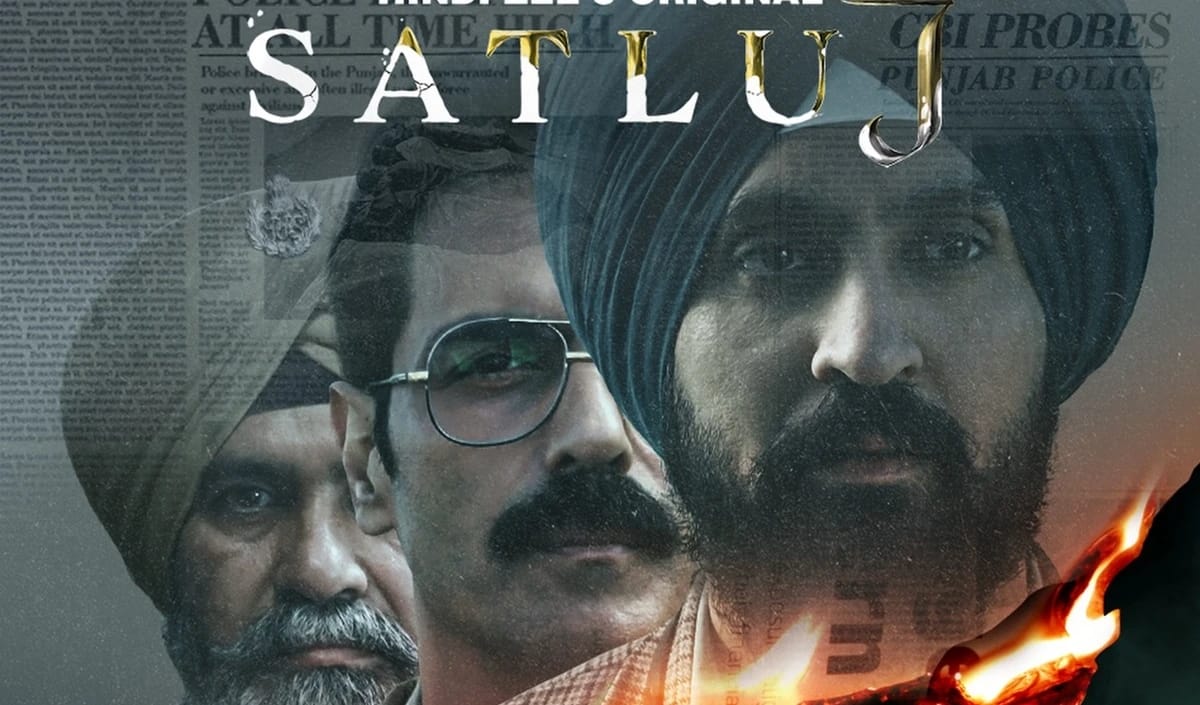
A film for which the makers fought a legal battle for years to get it on the screens of theaters and to save it from the scissors of the censor board, finally came on the OTT platform, but disappeared within just 48 hours. Sutlej, starring global star Diljit Dosanjh, was quietly streamed on OTT platform ZEE5 on July 3 and was removed from the catalog in India within two days.
Also read: Exciting first look of ‘Dada’ biopic! Rajkummar Rao shines as Sourav Ganguly, ‘shirtless’ moment recreated
The sudden arrival and departure of this film, based on the life of human rights activist Jaswant Singh Khalra and the dark phase of militancy of the 90s in Punjab, has created a new controversy regarding Indian digital media, censorship and freedom of expression. This entire incident has given rise to 5 such big questions, the answers to which are extremely complicated both legally and morally:
1. 127 Cuts problem: Why did the makers choose OTT by renaming ‘Punjab ’95’?
The journey of this film has been very controversial. The film was originally titled ‘Ghallughara’ (which means ‘massacre’ in Punjabi). It was later sent to the Central Board of Film Certification (CBFC) as ‘Punjab ’95’. Considering the sensitive subject matter of the film, the Censor Board imposed a condition of making at least 127 cuts in it including title, visuals and dialogues. The makers even approached the Bombay High Court against it, but seeing no way for a theatrical release, the petition was eventually withdrawn.
After this, the makers made a strategy to take advantage of the legal loophole or rather ‘regulatory gap’. While CBFC certificate is mandatory for cinema halls, OTT platforms come under the ‘Information Technology (Intermediary Guidelines and Digital Media Ethics Code) Rules, 2021’, where the rule of self-classification applies. The makers changed the name of the film to ‘Sutlej’ and released it directly on ZEE5 without pre-certification. Actor-writer Ghazal Thakur alleged that quietly releasing ‘Sutlej’ was a deliberate pre-planned move by keeping the government under the illusion that talks on ‘Punjab ’95’ were still going on. According to director Honey Trehan, he did not want to show the audience a cut-and-dry film, so OTT was the only way.
Also read: Kriti Sanon had to take a big decision during the shooting of Mimi, revealed after years
2. Who imposed ‘shadow ban’ on viewership of FIFA World Cup?
ZEE5 promoted this film heavily on its home screen. This was the time when viewer traffic on the platform was at record levels due to the exclusive broadcasting rights of the Football World Cup in India. But the film was removed in just 48 hours. The platform merely cited “current developments” as its reason.
According to government sources and PTI reports, the government had directed ZEE5 to remove the film citing security reasons and intermediary obligations under the ‘IT Rules, 2021’. Officials feared that the film could be used to fan and garner support for the weakening pro-Khalistan movement abroad or in Punjab. The surprising thing is that without any lengthy legal battle, ZEE5 immediately accepted the order. However, the film is still streaming on ‘ZEE5 Global’ outside India, leading to allegations of a “shadow ban” in India.
3. ‘Download it…’ Did Diljit Dosanjh promote piracy?
Soon after the film was banned in India, an Instagram live video of Diljit Dosanjh spread like wildfire on social media. Dosanjh said, “There was a fear that it might be removed, so I guess you would have downloaded it by now. Once something comes online, it never gets deleted.” He appealed to the fans to share this downloaded uncut version with others.
After this statement, the controversy deepened because legally, distributing copyrighted content on WhatsApp or Telegram without permission comes under the purview of piracy. Users like Arshdeep Singh Saini on He demanded the Union Ministry of Information and Broadcasting to ban Dosanjh completely in India. However, later ZEE5 and the makers issued a statement urging fans to stay away from pirated copies, which became a major irony of this entire controversy.
4. Are the screws going to be tightened on the freedom of OTT?
This 48-hour episode of ‘Sutlej’ proved that even though OTT platforms have been exempted from pre-censoring, they are not completely free from government interference and rules of ‘public order’. The makers bypassed the censor board by releasing the film, but in the name of national security, the government got it blocked in post-publication review. This development could form the basis for further tightening of OTT content regulation and streaming guidelines within India in the future.
5. Who ultimately benefited from this game of disappearance of ‘Sutlej’?
If we analyze this entire controversy with a cool mind, then everyone has benefited something from this 48-hour release:
Makers and Directors: They were successful in bringing to the world the ‘uncut and original’ version of the film, which they considered to be true art. Now whatever files are circulating on the piracy network, they have been recognized as the authentic versions of the makers.
OTT Platform (ZEE5): Even though the film had to be removed, this controversy along with the Football World Cup gave the platform tremendous publicity and buzz across the country.
Diljit Dosanjh and political parties: This issue has become heated less than a year before the Punjab Assembly elections to be held in February 2027. Sikh organizations and opposition parties have got a big political weapon to corner the government in the name of censorship and suppressing the history of Punjab.
The only loss has been to the audience who likes to watch cinema in a legal and official manner. After this controversy, ‘Sutlej’ may have legally disappeared from the digital space of India, but it has gone viral overnight on the underground routes of the Internet (Whatsapp, Telegram). As one user on the internet quipped, “Now is the time when makers themselves will beg for a ban on their films just to make them viral.”