
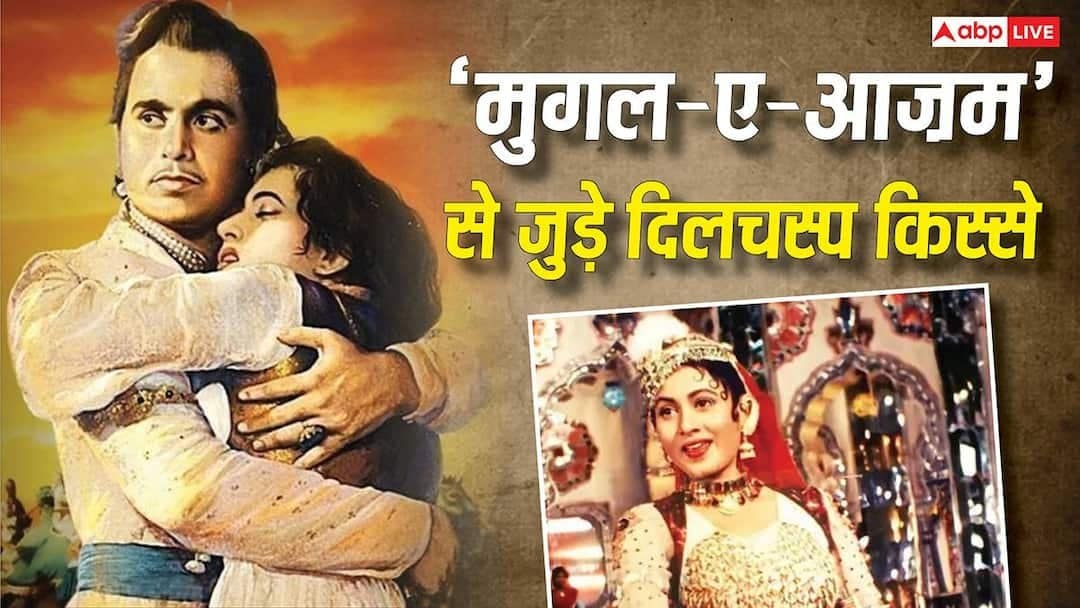
One of the most iconic films of Indian cinema, ‘Mughal-e-Azam’ is still known for its grandeur and grand production. This film, released in the year 1960, is considered to be the most expensive film of that era. The budget of this film was around Rs 1.5 crore, which is equivalent to around Rs 145 crore as of today. When this film was released in theatres, it created a stir at the box office.
Director K. Asif spent a lot of money on the film
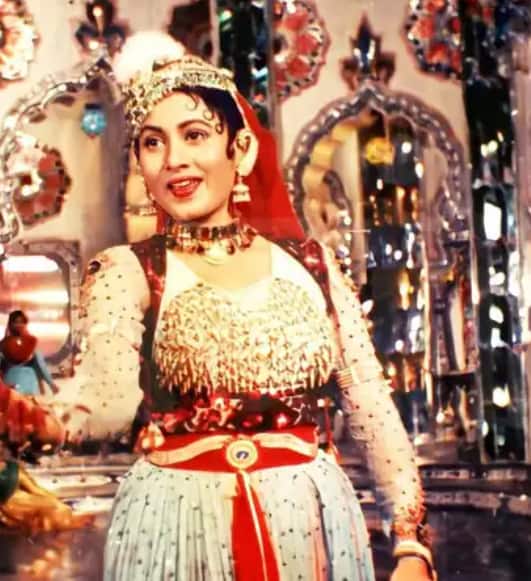
‘Mughal-e-Azam’ director K. Asif made this film in 1960 after almost a decade of hard work. He did not compromise in any way with his project. He spent money like water on this film. The shooting of the film was done in a very grand and detailed manner. According to Indian Express, Asif used real gold idols, real pearls and a pool filled with perfume, so that every scene looked real and royal. Even Belgian glass was ordered for the ‘Sheesh Mahal’ scene, which was also worth lakhs.
Dilip Kumar and director K. Asif did not talk
The special thing is that this film continued to be made for more than a decade. Many problems and controversies came to light during such a long production period. It is said that the relations between the lead actors of the film had deteriorated. Even Dilip Kumar and director K. The conversation between Asif had also stopped. Along with this, the production was struggling with continuous delays and rising expenses.
Also read:- Mughal-E-Azam: When only one song of ‘Mughal-E-Azam’ was shot in the budget of the entire film.
When the director stopped the shooting
Even amidst all these difficulties, Asif was very strict about his vision. He was in no mood to compromise on quality and realism in any scene. He once stopped the shooting because the real gold idol was not used in the temple scene of Jodha Bai. In another scene, when real pearls were needed for Salim’s welcome, he immediately rejected the fake props. At that time the price of these pearls was around Rs 1 lakh, which is considered equivalent to around Rs 97 lakh as of today.
Real perfume was used in the film
Of. Asif’s perfection was not limited to jewelery or props only. It is said that in one scene Anarkali was to be shown coming out of a pond filled with perfume. Earlier when the production team tried to shoot it with ordinary water, the director immediately rejected it. He believed that this scene would look spectacular only if real perfume was used in it. Only after this the shooting proceeded.
Belgian glass worth Rs 15 lakh
When Asif was shooting the film, technology was changing very rapidly. He decided that the song ‘Pyaar Kiya To Darna Kya’ would be shot in Technicolor. According to a report in ‘The Hindu’, Belgian glass worth Rs 15 lakh (Rs 14.5 crore in 2026) was imported to shoot the ‘Sheesh Mahal’ scene. Where many technicians could not understand for years how this scene was shot. Whereas, Director K. Asif and cinematographer R.D. Mathur came up with an ingenious way of using strips of clothes to reduce the camera glare and shot the song.
Producer warned Asif
After shooting 70 percent of Asif, he decided that he wanted to shoot the entire film in Technicolor, but then producer Shapoorji Pallonji Mistry finally showed strictness. The film had spent far more than its planned budget and had been in the making for almost a decade. He could not tolerate any further delay. The producer threatened Asif that if he even thought of remaking the entire film, the existing film would be given to distributors and released as it is. Distributors were also waiting for the film for a long time.
Ustad Bade Ghulam Ali Khan was given Rs 25,000 for a song
Not just costumes and props, every department of the film spent money as if they had no shortage of money. In a 2004 interview, photographer Jayesh Seth said that Ustad Bade Ghulam Ali Khan was paid Rs 25,000 for a song, while Lata Mangeshkar and Mohammed Rafi got Rs 200-300 per song. Rs 25,000 is equivalent to approximately Rs 24 lakh as of today.
Superhit at the box office
Despite the long shooting time, rising expenses and many controversies, the film proved to be a big hit at the box office. According to Bollywood Hungama, ‘Mughal-e-Azam’ had collected Rs 3.5 crore at the box office, which is considered equivalent to approximately Rs 340 crore as of today. It emerged as the highest grossing film of that era.
Also read:- Why was this song of ‘Mughal-e-Azam’ recorded in the bathroom? interesting story
No film was made after ‘Mughal-e-Azam’
Even after the immense success of ‘Mughal-e-Azam’, director K. Asif’s film career did not progress much. He had given up making films. The director started making the film ‘Love and God’ with Guru Dutt in 1963, but after Dutt’s death in 1964, he had to stop the film midway. A few years later, he restarted the film with Sanjeev Kumar, but Asif died in 1970 before the film was completed. Ultimately the film was completed by his wife and it was released a few months after Sanjeev Kumar’s death in 1986.