
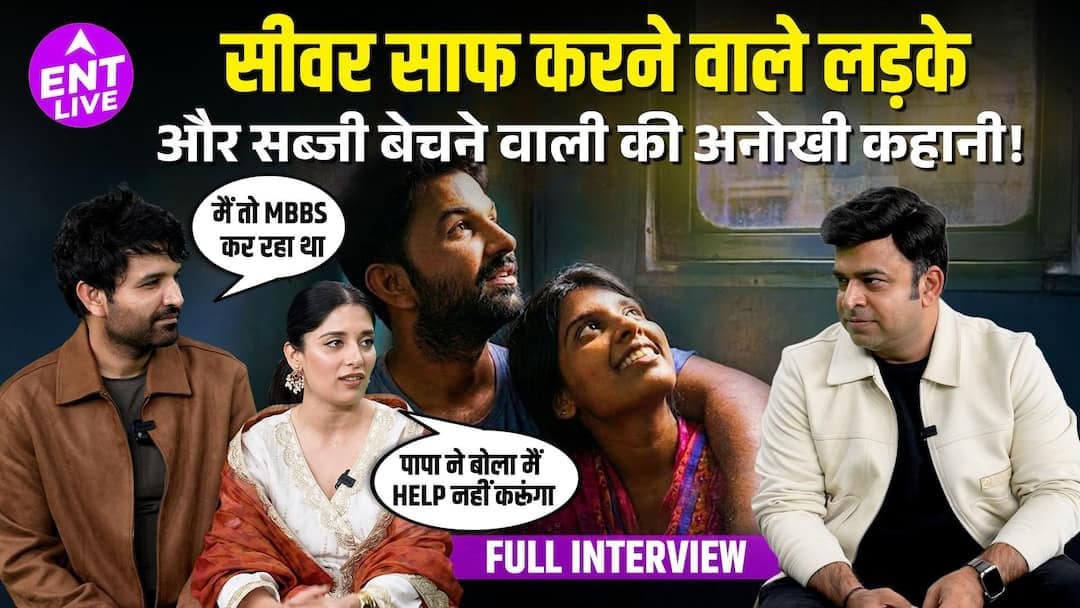
This conversation tells the journey of a film which is not just cinema but a story derived from reality. The lead actress of the film says that the industry is judged on the basis of appearance. The director also initially had doubts whether she would be able to play a character like a vegetable seller or not. He himself was not confident, but he asked for 10 days and by staying with the real vegetable vendors, he learned their body language, tone and lifestyle. The male lead actor tells that for this film he himself had to enter the gutter and drain. Working with real sanitation workers, he learned how inhumane and emotionally draining this work is. When a worker gets emotional and hugs him after the shoot is over, it makes him realize that for the actors this is a role, but for them this is life. The actress tells that she is the daughter of a well-known politician, but her father never called for her. Initially he felt wrong about this, but with time he understood that this struggle makes him a better actor. His father supported this film for the first time because it was socially relevant, not political. Many big leaders and artists became emotionally moved after the screening of the film. Some leaders also raised questions in Parliament on the safety and rights of sanitation workers. This becomes the real success of the film. Both the actors say that not every film is made to earn money. Cinema is unpredictable. If the content is honest and powerful, then word of mouth becomes the biggest promotion. This film is also made with the same belief. In the end, the team tells the audience that if the trailer, music and story touch you, then go to the theater and watch the film. This is not just a love story, but a story of courage, dignity and humanity.