
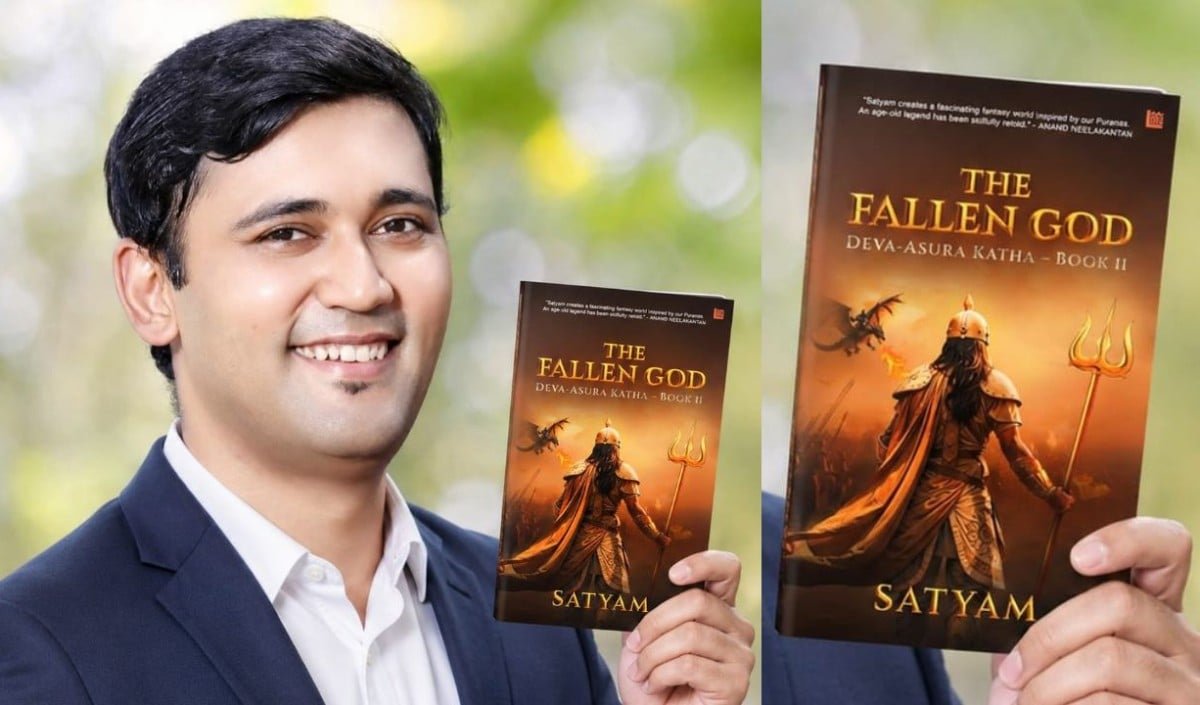
In the world of books presenting Indian mythology in a new style, Satyam Srivastava’s ‘The Fallen God’ is rapidly gaining popularity. This book is the second part of his ‘Dev-Asur Katha Trilogy’, which continues the story of the first book ‘The Wielder of the Trishul’. However, this is not just the next chapter, but an expansion of a vast fantasy world where power, war and faith constantly collide.
The story is set in a fictional world named Dhruva-Lok, where mythological elements are shown not from a traditional religious perspective, but from the perspective of politics and conflict. Here kingdoms break up, alliances change and divine weapons become not just objects of worship, but symbols of power and destruction. This is why the world of the book remains constantly unstable and mysterious.
The main character of this story is Lakshya, who is an ordinary soldier in the beginning. But his life changes when he becomes the bearer of Lord Shiva’s trident. This power brings him more troubles than honor. His presence increases the tension between the kingdoms and gradually the entire Dhruv world reaches the brink of war. Every decision in the story leads to big consequences, keeping readers in constant suspense.
The rise of Vritra and the Dev-Demon conflict have also been made an important part of the book, but its biggest feature is that it does not become just a war story. The author has also shown the characters’ mental dilemmas, moral conflicts and questions of duty in depth. No one here seems to be completely right or wrong, and this is what makes the story more real and impactful.
Satyam Srivastava, who studied at IIT Bombay and worked in the Indian Revenue Service, is among the new Indian writers who are presenting Indian mythology in the form of modern fantasy. Through ‘The Fallen God’ he has proved that stories based on Indian myths can also create an international level fantasy world. Instead of repeating mythological stories, this book tries to look at and understand them from a new perspective.